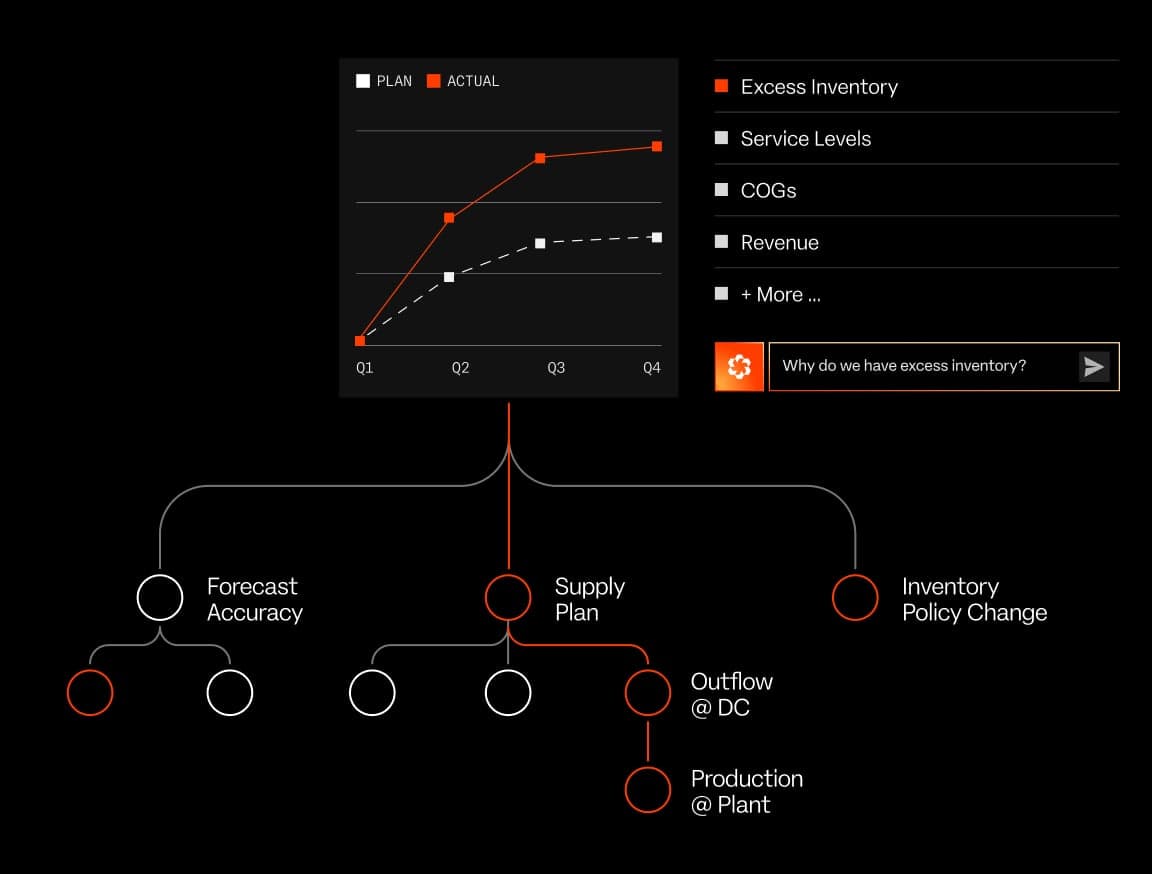
Elite Sports Teams watch tape to learn Why?
Now your business can too.

Post-Game Analysis for Every KPI
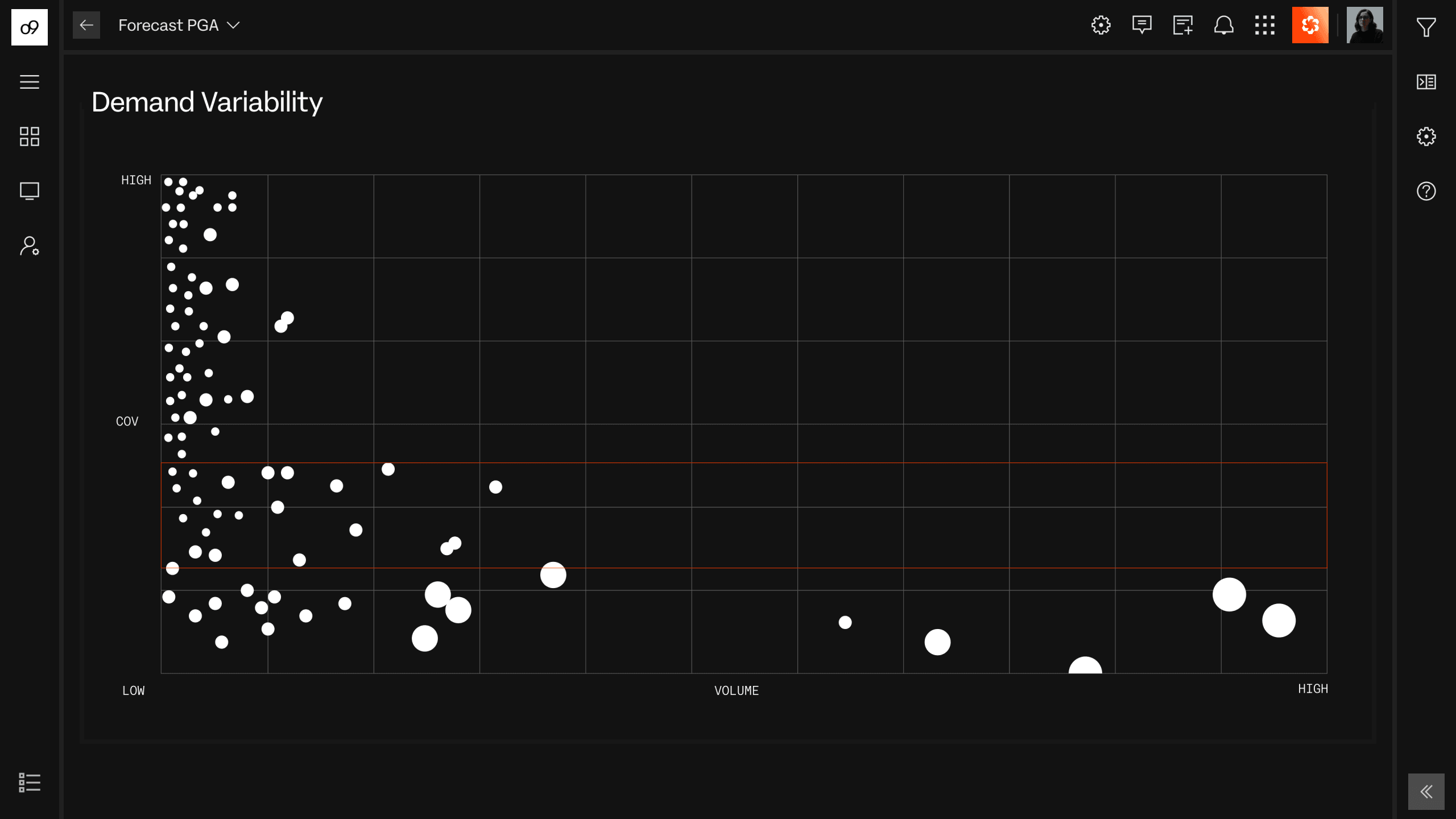
Forecast Accuracy PGA
Analyze the root cause of poor forecast accuracy and bias.
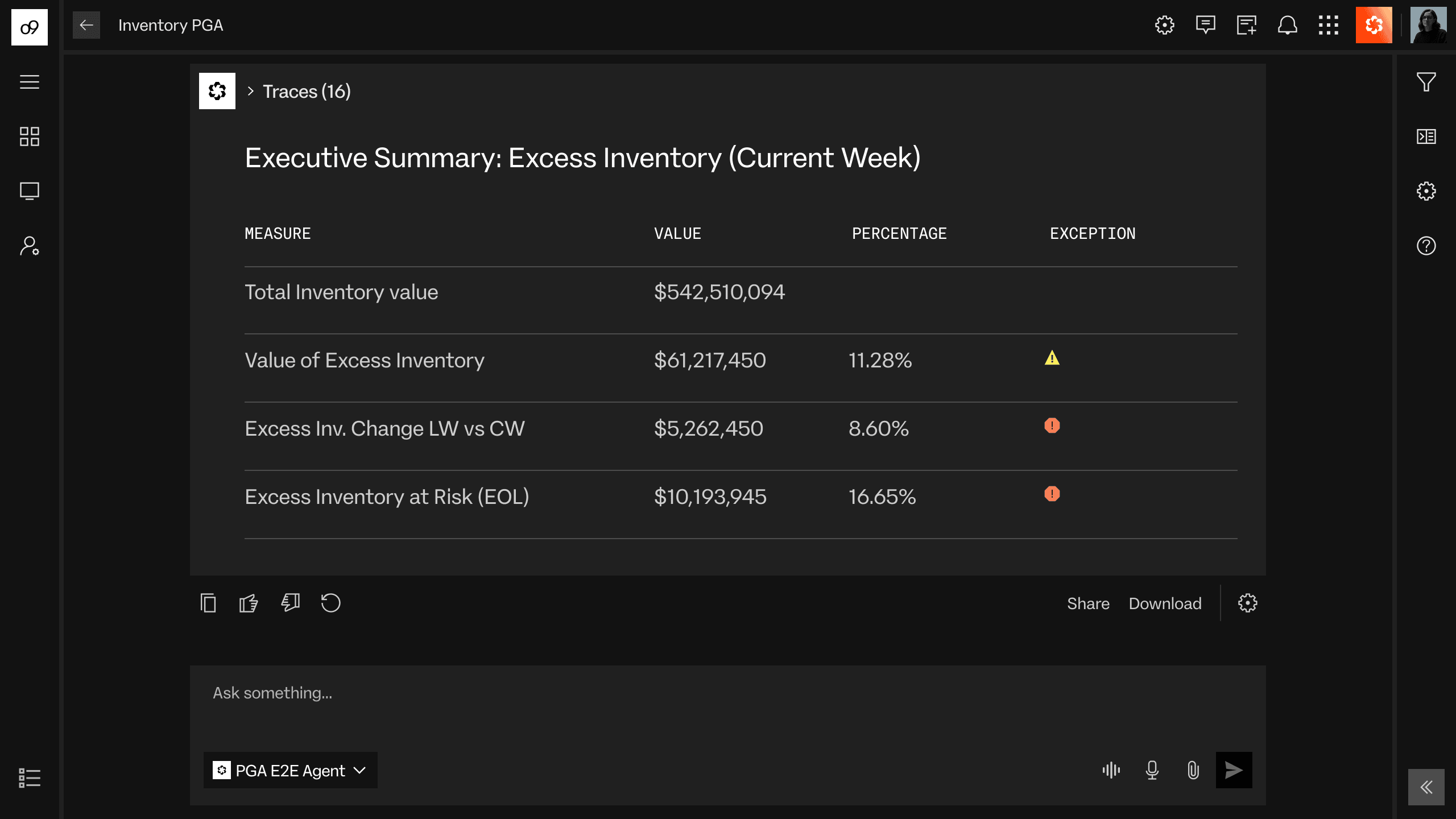
Inventory PGA
Answer why there is excess inventory build up or stockout.
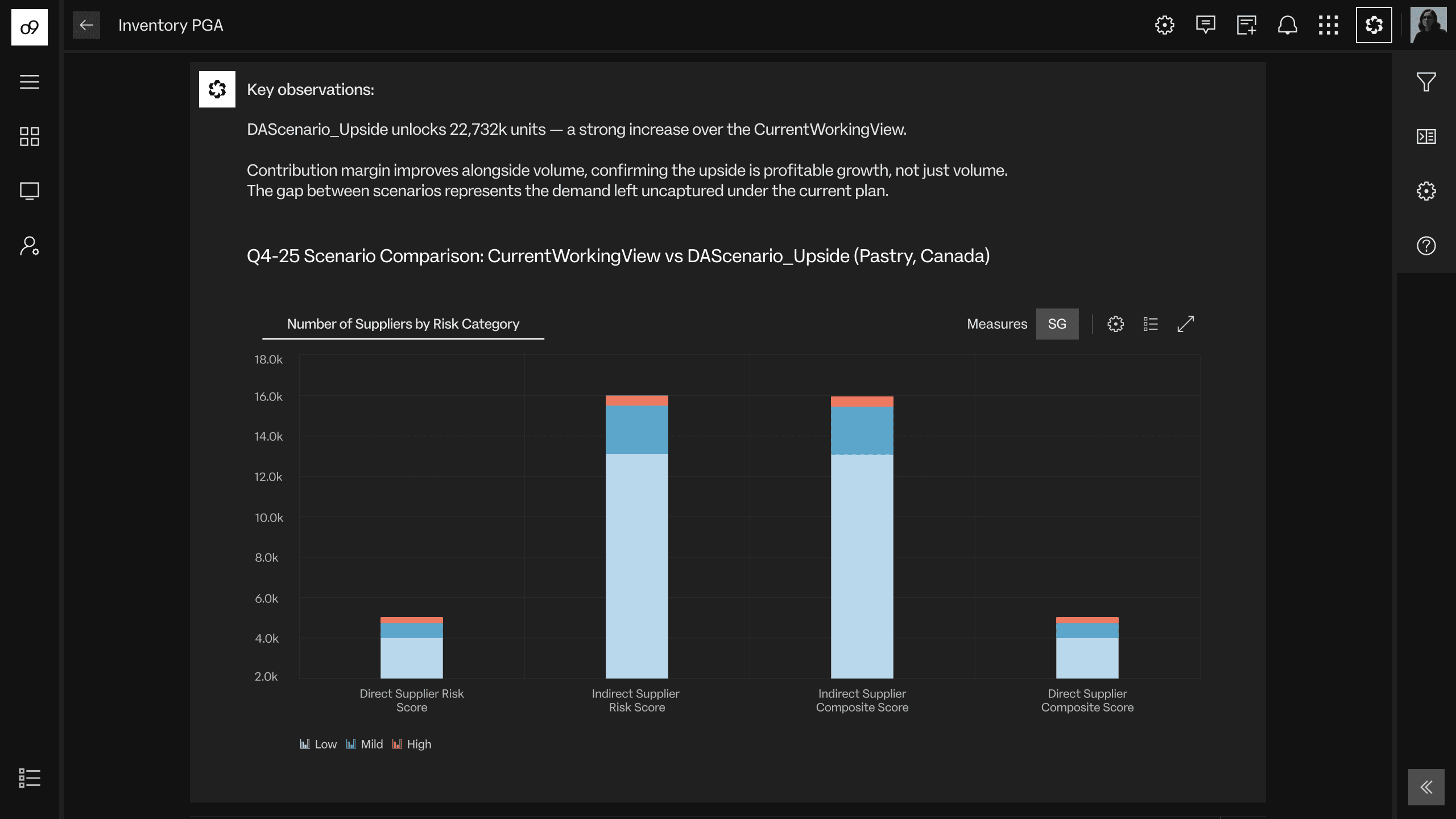
Service Level PGA
Understand root cause of the misses in Service Level performance.
Executives are Excited
“This is exciting. One click. We know where and why we have excess inventory and what to about it”
Director, Supply Chain
National Premier Wine & Spirits Retailer
“Inventory PGA is powerful. How quickly can we extend it across all KPIs?”
VP, Supply Chain
Global Diversified Food & Beverage Enterprise
[0/0]
How o9 PGA Stands Apart
Questions.
Clear Answers.
Getting started with your first Post Game Analysis (PGA) doesn't require perfect data; a few core files are sufficient.
While the specific inputs depend on the analysis type, they generally include your item master, historical actuals, and plan snapshots covering demand, production, or procurement. For a more in-depth Root Cause Analysis (RCA), include multiple historical plan versions to accurately trace outcome evolution.
For a complete breakdown of mandatory and optional data inputs that unlock deeper insights—organized by analysis type—please refer to the Data Requirements.