13 read min
Two challenges are reshaping how every global enterprise operates, and on June 4th in Amsterdam at aim10x Europe, o9's largest event for the EMEA region, the company previewed its next 10x innovation built to address them.
The first challenge is VUCA: the volatility, uncertainty, complexity, and ambiguity that has become the permanent business climate since COVID. In a stable world, siloed planning and disconnected decision-making are inefficient but survivable. In a volatile one, they become expensive. When demand swings, supply is disrupted, and conditions shift faster than the organization can react, every gap between functions turns into a forecast miss, an inventory build-up, a missed service level, or a margin erosion. Volatility doesn't create the leaks, but it widens them, and it does so continuously.
The second challenge is that plugging those leaks still takes too long. Everyone inside a large enterprise can see value draining away, but fixing it traditionally requires a multi-year transformation program, and in a volatile world, that is a timeline no global enterprise can afford to wait for.
Compounding both is the mandate now landing on every executive's desk: unlock business value from AI. It raises the stakes rather than resolving them, and most leaders are still unsure what the right approach actually is.
Across three connected opening keynote sessions, o9 laid out a path forward: a next-generation operating model called APEX, the neuro-symbolic AI that makes it possible, and a live agentic demo that showed it solving a real customer's excess inventory problem.
The throughline ran from concept to foundation to proof. And it started with a story about potato chips.
The Frito-Lay Story: The Silos That Cause Value to Leak
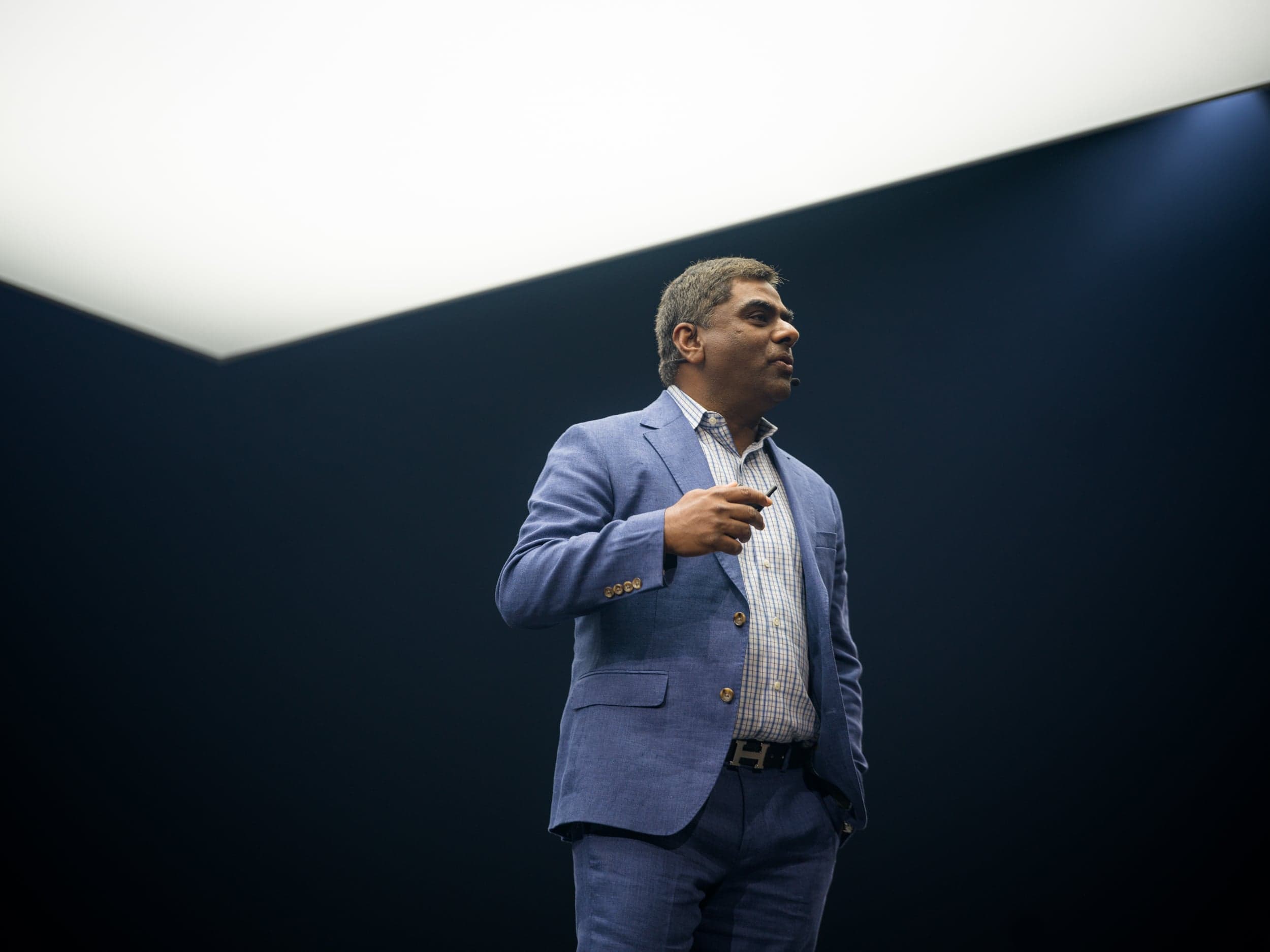
If the goal is to stop the leak without a multi-year program, the first step is understanding why enterprises leak value at all. Chakri Gottemukkala, o9's Executive Chairman, CEO, and Co-Founder, traced it to a single culprit o9 has pursued since its founding: silos. And to show what an enterprise without them would look like, he told the story of Mr. Lay, the founder of what became Frito-Lay and, eventually, part of PepsiCo.
In the early days, Mr. Lay was a one-person, silo-free operating model. He drove the trucks, stocked the shelves, talked to consumers, and decided what to buy, make, ship, and price, all by himself. The story matters because it isolates the two things a healthy operating model needs, both of which Mr. Lay had by default. First, he had complete visibility: "perfect value chain visibility, end to end," as Chakri put it, with every decision feeding the next day's choices. There were no silos in execution. Second, and just as importantly, "no silos in learning." He saw the result of every decision himself and corrected the next morning, continuously, without anyone having to call a meeting.
Then the company scaled. Hundreds of brands, hundreds of markets, complex supply chains, and decision-making fractured across all of it. Both of Mr. Lay's advantages disappeared. Visibility fragmented into execution silos, and the instinctive, daily learning fragmented into learning silos. That is where value leakage comes from, and it is why fixing it has always required a transformation: the connections Mr. Lay held in one head have to be rebuilt across an entire organization.

Visibility Solved, Learning Still Missing: The Gap APEX Fills
o9's entire premise has been to give a sprawling enterprise back what Mr. Lay had instinctively. The first half of that promise is already delivered. The o9 Digital Brain platform, built on patented enterprise knowledge graph technology (EKG) that o9 pioneered more than a decade ago, restores end-to-end visibility, with every decision pointed at a single goal. Multiple customers have since built billion-dollar value cases on it. The execution-silo problem, to a meaningful degree, has been solved.
But Mr. Lay's second advantage, continuous learning, has not. Large enterprises still don't learn and correct in real time the way he did. They wait for a crisis, launch a multi-year transformation program, and often slide back within five years. That is the learning silo, still unsolved, and it is precisely the gap that the two megatrends make unaffordable: in a volatile world accelerated by AI, no company can wait for the next crisis to learn what is going wrong.
APEX is o9's answer to that remaining half. If the Digital Brain restored the connected visibility Mr. Lay once had, APEX is designed to restore the continuous learning and adaptation that made that visibility valuable. It is o9's vision for a future operating model: one that helps enterprises sense change, learn every day, and turn VUCA into value.

What APEX Means: Agile, Adaptive, Autonomous Planning and Execution
"APEX stands for Agile, Adaptive, Autonomous Planning and Execution," Chakri said. The o9 Digital Brain already makes "Agile" possible by giving teams a shared, real-time model of the business, so they can sense change, evaluate trade-offs, and adjust plans quickly. Autonomous, which concerns how AI reshapes roles and automates decisions, remains the frontier.
But the center of gravity at aim10x Europe was the term in the middle: Adaptive. This is the part that restores Mr. Lay's continuous learning at enterprise scale, and Chakri explained what it requires through what o9 calls the "Three W's": What happened? Why did it happen? What should we do about it?
Most companies are reasonably good at answering the first question. They can see that inventories are rising, service levels are falling, or margins are under pressure. They know what happened.

Answering "Why": The Causal Gap That Blocks Continuous Learning
The challenge "Adaptive" addresses, and the reason enterprises can't learn the way Mr. Lay did, is the second question: why? Why did the forecast miss? Why are margins eroding in key markets? Why did inventory build up in one region while shortages emerged in another? Organizations are often rich in data but poor in causal understanding. Without a clear explanation of why outcomes occurred, they can't learn from them, and so they can't adapt without a full-blown transformation to figure it out.
Adaptive enterprises close that gap by identifying the root causes behind business outcomes. They use those insights to continuously refine their models, improve their understanding of the business, and learn from every decision. Once they understand why something happened, they can answer the next question with confidence: what should we do about it? Which decisions should change? Where should resources be reallocated? What actions will have the greatest impact on performance?
So "Adaptive," continuous learning, and answering "why" are three names for the same capability, and Chakri was emphatic about what it takes to deliver it. Neural AI, meaning LLMs, makes it possible to ask and answer questions at unprecedented speed, but it cannot explain why business outcomes occur unless it understands how the enterprise actually works, which is the domain of symbolic AI.
That is the role of o9's Enterprise Knowledge Graph. If the LLM is the thinking brain, the EKG is the model of the body's various systems: a digital representation of how products, customers, suppliers, factories, inventories, constraints, and decisions are connected. It provides the cause-and-effect relationships that allow AI to move beyond reporting symptoms and begin reasoning about root causes and actions.
"Claude cannot provide reliable health information," Chakri said, "unless it has precise knowledge of how the human body works." The same principle applies to the enterprise.

Why Language Models Alone Can't Answer "Why"
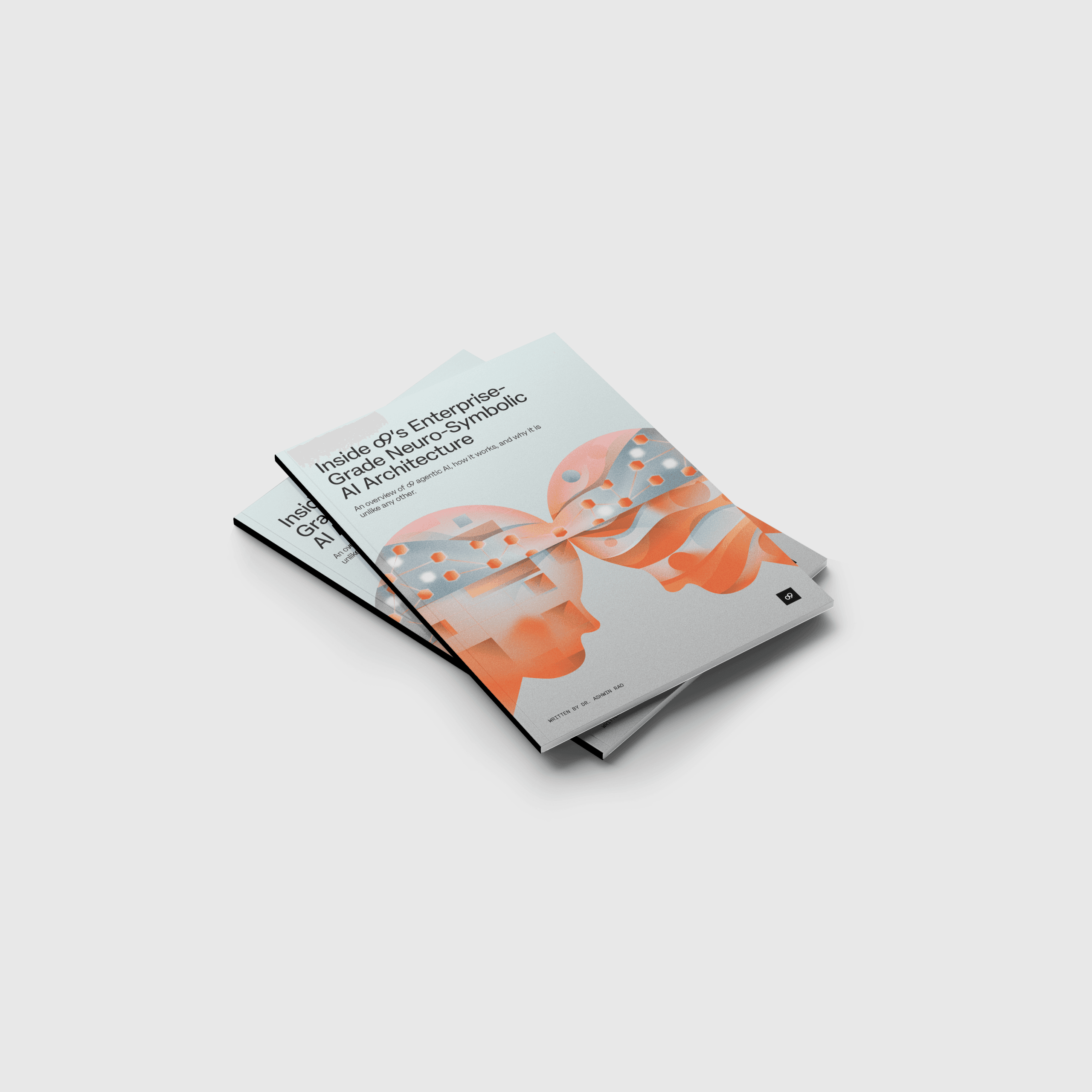
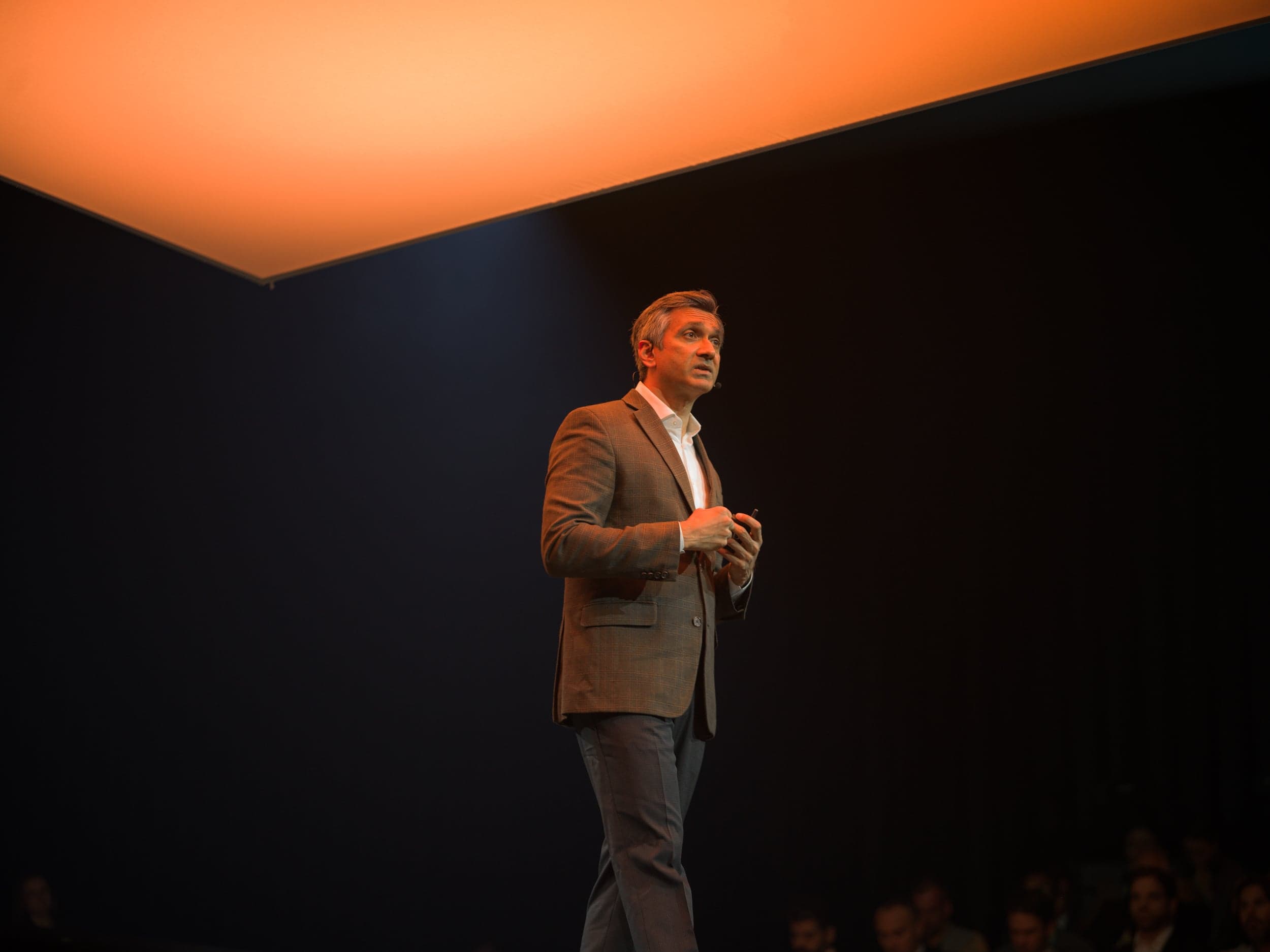
If answering "why" is the key to continuous learning, the next question is what kind of AI can actually do it. Dr. Ashwin Rao, Executive Vice President of Next-Gen AI and Technology at o9 Solutions, picked up exactly there, explaining why the convergence of neural and symbolic AI is essential to building truly agile, adaptive, and autonomous enterprises.
Ashwin's perspective is shaped by an unusually broad career. He spent years on Wall Street, where the cost of an unreliable model is measured in real money. He later led AI at Target Corporation and now serves as an adjunct professor of applied mathematics at Stanford, where he continues to conduct AI research.
That combination of trading-floor accountability, retail pragmatism, and mathematical rigor ran through his presentation. While acknowledging the transformative impact of large language models, he gave a clear explanation for why language alone is not enough.
"Language is not complete cognition," he said. "LLMs are powerful, but we need AI that goes well beyond the AI of language. That's the AI of mathematics, structure, and domain knowledge."
That gap explains why so many enterprise AI agents disappoint. The deeper issue is reliability. LLMs work by approximation, and approximation is a virtue for scale but a liability for planning. "You have to be exact, you have to respect the rules and constraints, you have to respect the decision rights people have in an enterprise." A language model, however capable, is the wrong tool for that job.
Neuro-Symbolic AI: The Machinery That Lets an Enterprise Learn
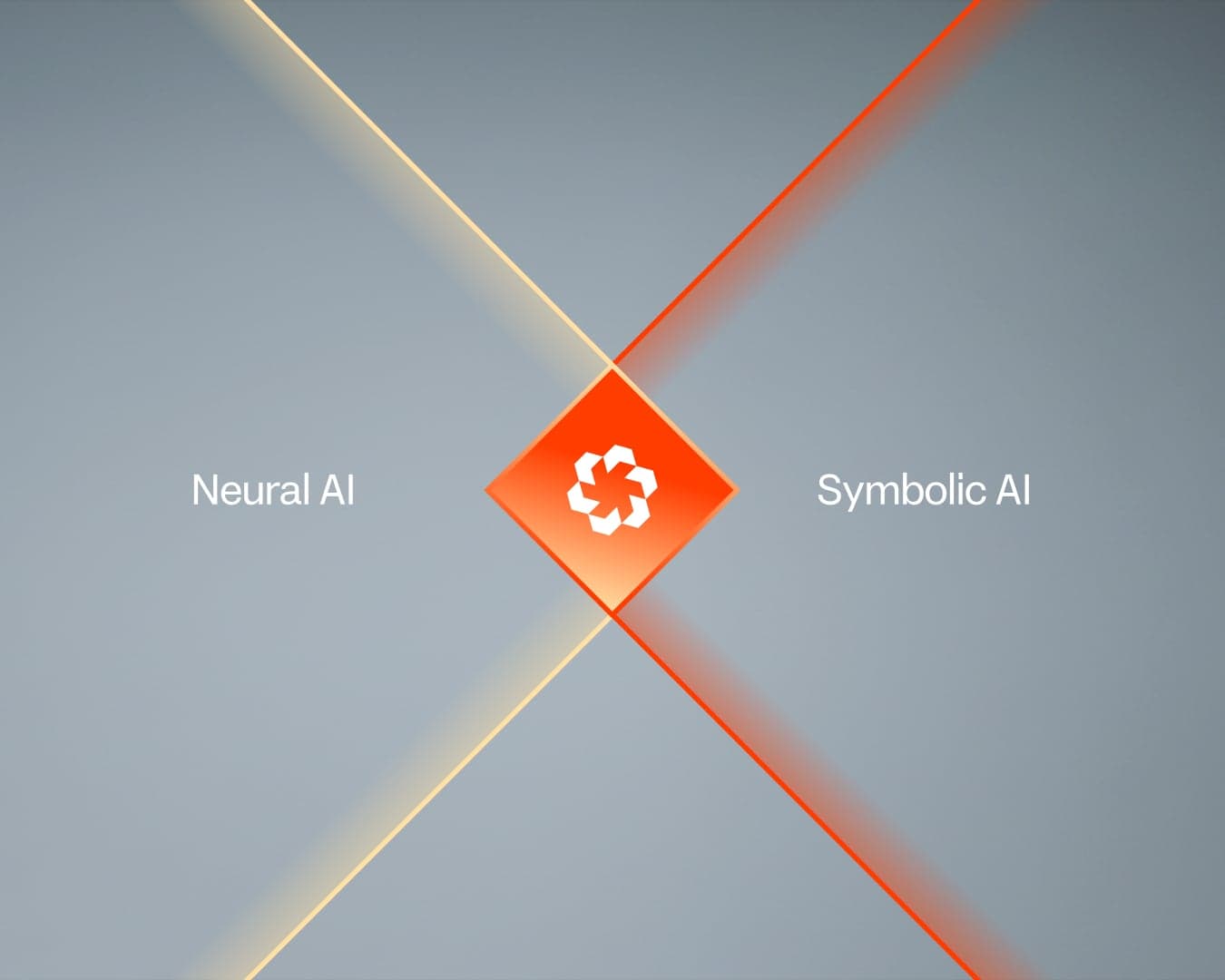
The complement is symbolic AI, the discipline o9 has been building for fifteen years. It encodes the enterprise knowledge graph, the mathematical logic, and the decision models for inventory, pricing, and the rest. Its decisive advantage over a neural network is that it can show its work: "It's traceable, it's auditable, and it can explain things to you in very clear business terms as to why it made the decision." Neither half is sufficient alone. "What's the strength of the neural on the left is the weakness of the symbolic on the right, and vice versa," he said. "That combination of symbolic AI and neural AI is called neuro-symbolic."
Ashwin then connected the architecture directly back to Chakri's "why," and to Mr. Lay's continuous learning. The enterprise knowledge graph doesn't just store the business: a decision context graph records who decided what, when, and on which facts and assumptions, while a learning layer links those decisions to the outcomes they produced, steadily codifying what works into the rules that govern the company.
That is the machinery that lets an enterprise learn continuously, the way Mr. Lay once did instinctively, without needing a crisis to trigger the lesson. But an architecture described from a stage is still a promise. The natural next question is whether neuro-symbolic AI can actually answer "why" on a real business problem, with the traceability Ashwin had just described. That is exactly what the o9 team turned to next.
Post-Game Analysis in Action: Diagnosing $60M in Excess Inventory
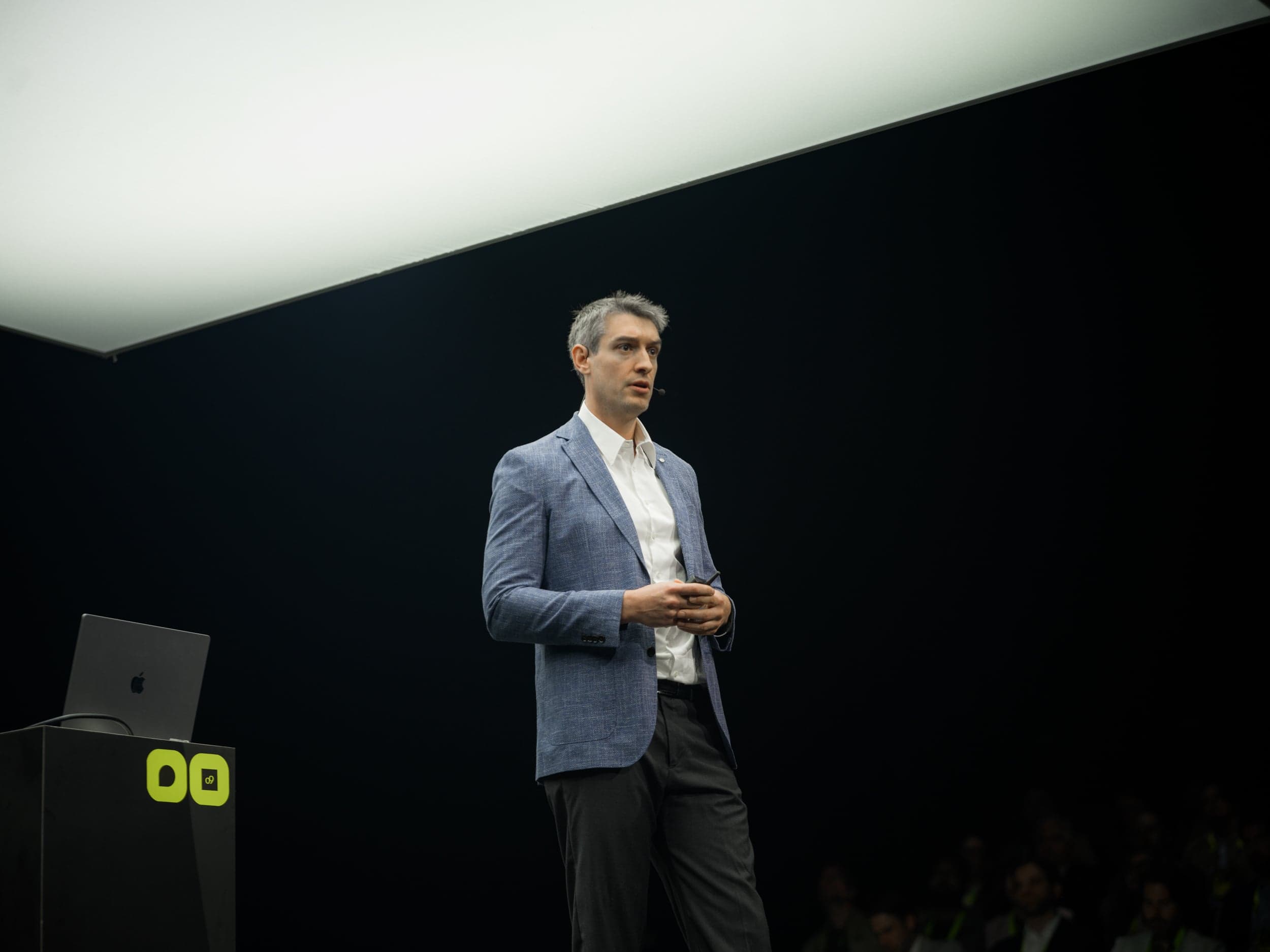
The demonstration was post-game analysis, the technology that puts the theory on screen, and it began from the gap everything so far had been building toward. Every planning system on the market can show that inventory is up. Yet none can explain why. That was the gap Peter Taylor, SVP of Solutions Consulting at o9 Solutions, opened with. Planning systems forecast the future well but rarely tie decisions back to outcomes, and today's post-game analysis, in the form of dashboards and consulting decks, stops short of getting to the root cause. "It's about treating the smoke of an inventory problem," Peter said, "but doesn't get to treating where there are fires in the organization." The result is politics and inaction: too complex to diagnose, and too contested to fix.
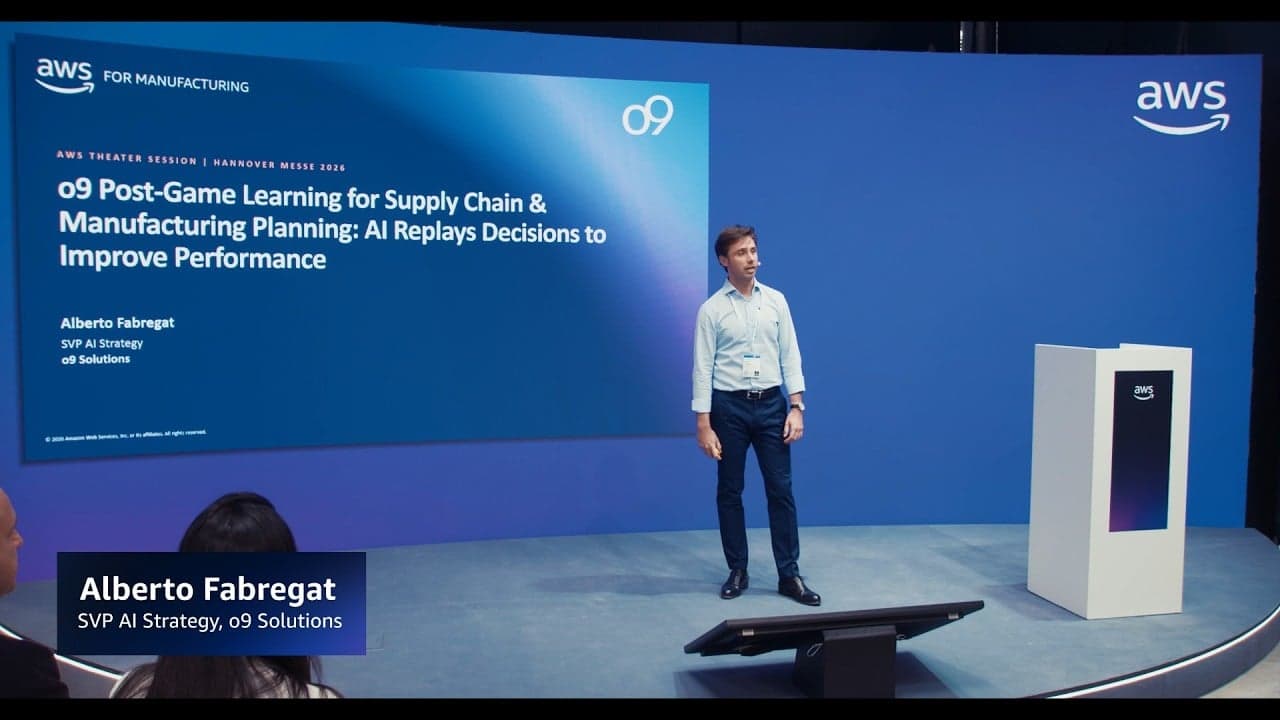
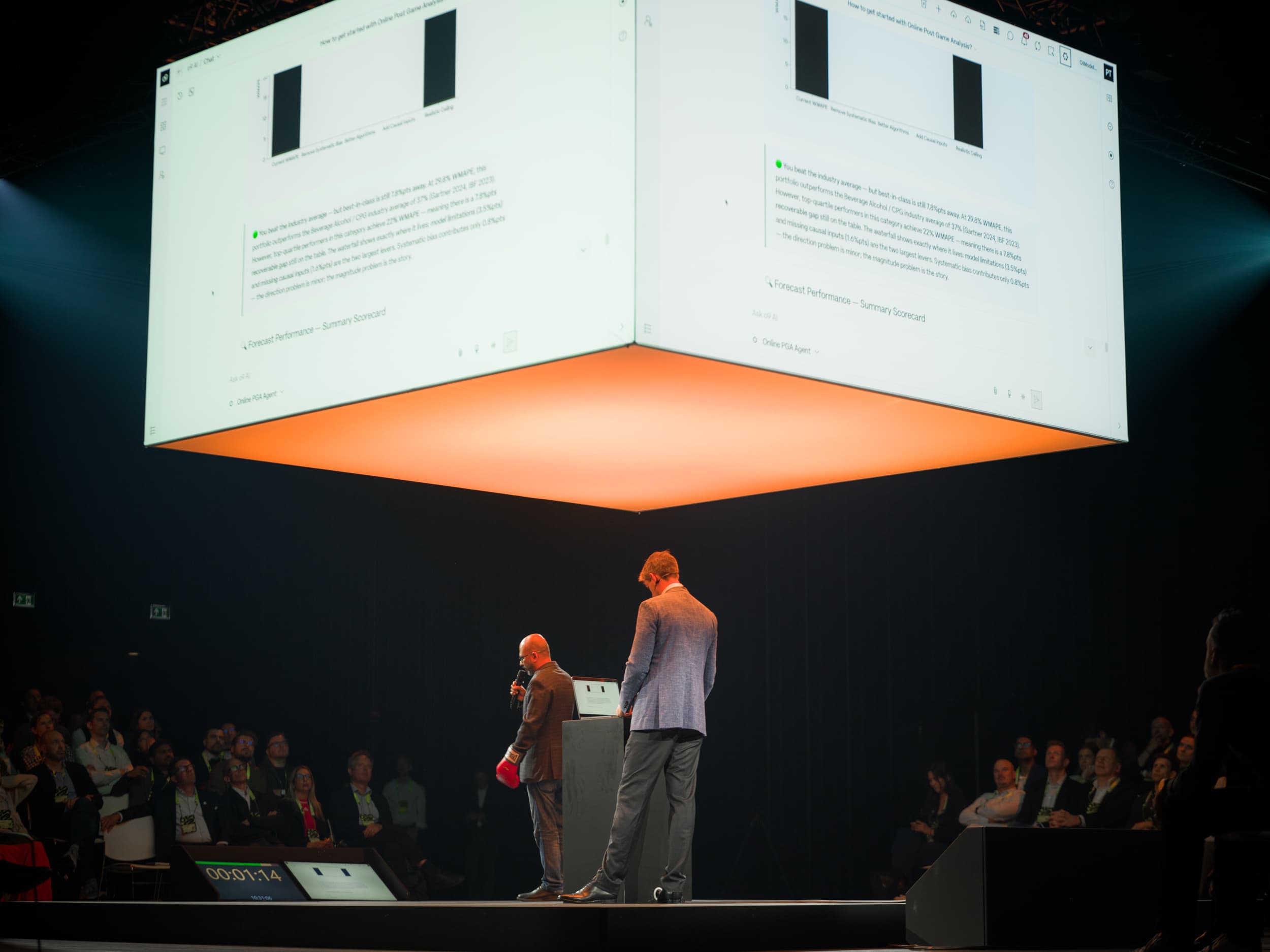
Working through a real excess-inventory analysis for a beverages customer, Peter showed an agent generating an executive narrative on four questions: what happened, where it happened, why it happened, and what to do. Visibility alone has value; he cited $100 million in inventory savings simply from connecting inventory data across divisions and ERPs that no single view had reached before. But visibility is a one-time gain, the execution-silo half of the problem. The key innovation is the why. The system mines the decision trail, including the system forecast, the planner's override, the production order, and the next override, to answer a precise question: when inventory piled up at this node, which decisions and policies caused it? A poor forecast at the DC, or a production lot size set upstream at the plant a month ago? The agent then sizes the prize, in this case $60 million in recoverable excess inventory, split across demand planning, production, and procurement, with fixes ranging from immediate policy changes to longer transformation work.

Inside the Demo: How the Agent Maps Data and Stays Auditable
Nitin Goyal, SVP of Product Management at o9 Solutions, then showed how the analysis is assembled, and how it embodies exactly the neuro-symbolic split Ashwin described: the neural front end sitting on the symbolic foundation beneath it. A user uploads raw files and the agent does the mapping work that normally consumes months, linking raw data to o9's data model without manual preparation. It profiles the data, overlays external drivers, and benchmarks forecast quality against industry norms, in this case flagging a gap between the customer's 30% error rate and a 22% industry benchmark, before recommending three concrete levers, starting with removing biased overrides. Every step is inspectable. "You can see the traces," Nitin said, "so you have the confidence that it is actually using the information and not hallucinating." The auditability Ashwin had promised from symbolic AI was visible on screen.
The demo collapsed into a single session of minutes what typically takes months of analysis. But the deeper point was not speed. It was that the "why" question Chakri opened with, the one enterprises have never been able to answer reliably, now had an answer that was traceable, explainable, and ready to act on. The team pointed the audience to a live site, pga.o9solutions.com, to run the analysis on their own data.
From Periodic Crisis to Daily Habit: The Enterprise That Never Stops Learning
What the day actually argued is simple, and it closes the loop back to where Chakri began: the bottleneck in enterprise performance is no longer prediction. It is diagnosis and change. Chakri located the problem in the years a company bleeds value before it understands why. Ashwin explained why the cure is now buildable, in the marriage of neural reach and symbolic precision. Peter and Nitin showed it answering the why on a real balance sheet, in minutes.
The ambition underneath it all is the one Mr. Lay embodied by accident: an enterprise that sees the whole value chain, connects every decision, and learns continuously. The difference is scale, with a billion value-chain nodes rather than one person and a truck. APEX is o9's argument that AI can finally make that enterprise real, turning transformation from a periodic crisis into a daily habit, which is the only speed that a volatile world allows. aim10x Europe was the preview.
aim10x Americas, on September 23rd in Chicago, Chakri said, is where it launches.
About the authors

The Editorial Team, o9
A multidisciplinary collective of editors, strategists, technologists, and former executives with experience across Fortune 500 companies and top consulting firms. Grounded in o9’s mission to help enterprises make faster, better decisions through the power of AI-driven planning and execution software, the team shares clear, practical insights on digital transformation, supply chain, and enterprise planning to support business leaders in navigating complexity and driving change.